
Art
How to start an artistic research sketchbook
11/12/2026
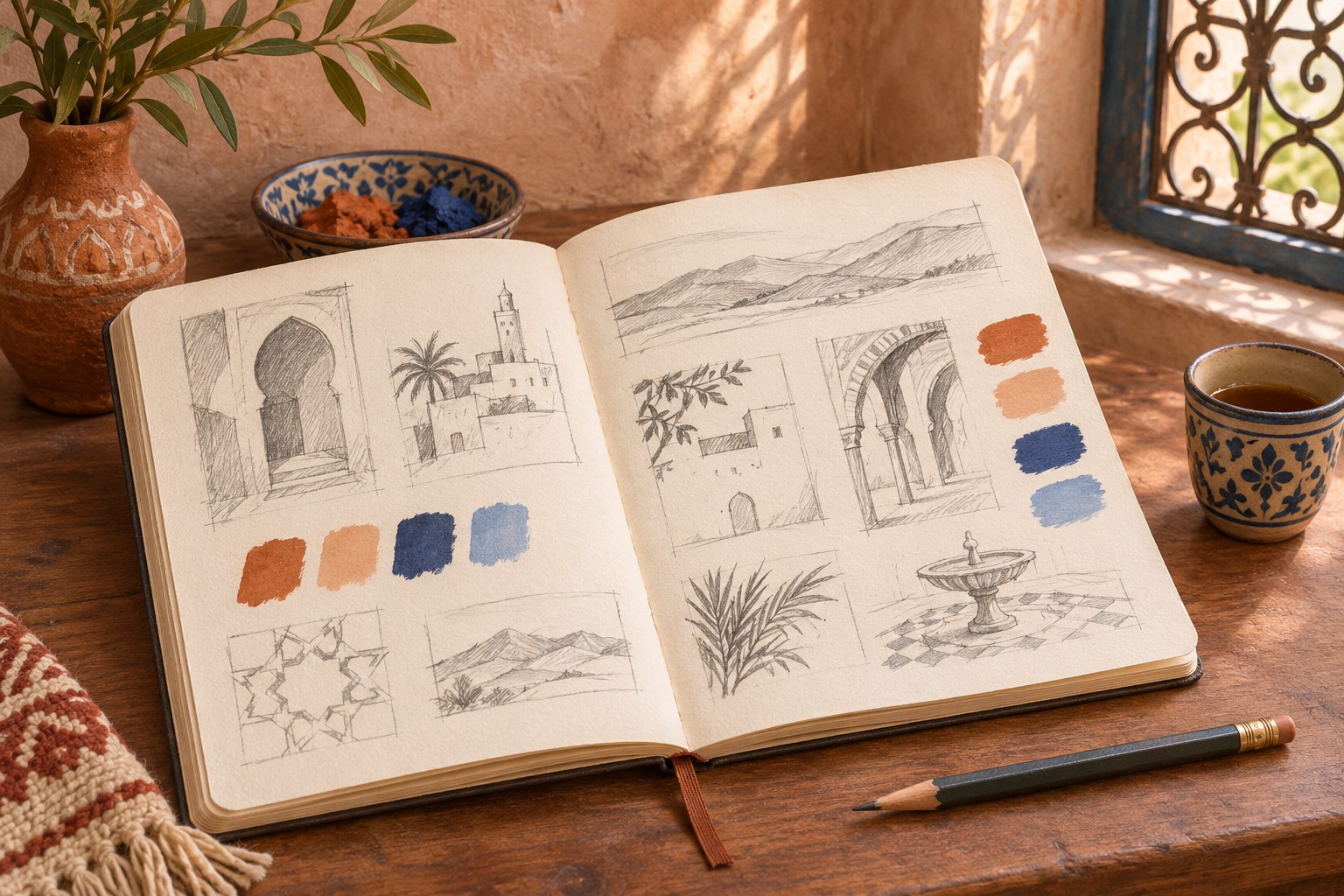
Gather observations, test compositions and revisit your ideas with a sketchbook that is easy to maintain.
An artistic research sketchbook can hold quick sketches, words, colour tests and questions that remain open. It lets you record what catches your attention and return to an idea when you are back in the studio. Start with a sketchbook that is easy to carry and a tool you enjoy using.
1. Choose a starting question
Give your first page a concrete question. You might explore how to depict a shadow in a narrow street, simplify a figure or combine two colours. Add the date and spend a few minutes drawing an initial response. A focused question helps you decide what to observe during the day and what to try in your next session.
2. Gather your own observations
Sketch a detail you see in person, record a colour combination or briefly describe an impression. In a street, a garden or your home, look at lines and relationships between shapes. If you add a photograph or a found image, note its source. This helps you distinguish direct observations from references that inform your research.
3. Try several compositions
On a new page, draw four small frames and make four versions of the same subject. Move the main shape, change its size or vary the space around it. Then test a pair of colours in the margin. Under each version, write a few words about what interests you and what you want to explore further. These notes make the studies easier to revisit.
4. Review and choose the next step
After a few sessions, leaf through the sketchbook and look for an idea that keeps returning. Circle a sketch or mark the page, then write down a manageable next action, such as enlarging a composition on a separate sheet. Keep the uncertain pages too. They record choices you have already tried and may offer a starting point for another work.